
Dock construction installation Tampa Bay Florida
Licensed Dock Builder — Tampa Bay, FL

Dock Design, Construction
& Installation in
Manatee, Hillsborough & Pinellas

Florida License No. CBC1264493  |  Serving the Tampa Bay Waterfront Custom fixed docks, floating dock systems, and hurricane-resistant marine construction — with full FDEP and Army Corps permitting management, seagrass and manatee zone assessment, and marine-grade materials built for Tampa Bay saltwater.
Florida Licensed & Insured — CBC1264493
Full FDEP + Army Corps Permit Management
Seagrass, Manatee Zone & Aquatic Preserve Assessment
316 SS Hardware & Hurricane-Resistant Construction
Licensed & Insured FL License No. CBC1264493
Full Permit Management FDEP, Army Corps, County
Marine-Grade Materials 316 SS Hardware & Composite Decking
Hurricane-Resistant Design Post-Helene and Milton Experience
The Honest Reality

That Old Dock Is Costing You More Than You Think. Here Is Why.

There is something both wonderful and genuinely frustrating about waterfront property in Tampa Bay. The view is incredible. The access to the water is what you paid for. And then you walk out onto a dock that wobbles at the fifth board, has a piling that leans a little more each year, and has fascia boards going soft at the waterline from fifteen years of saltwater exposure. It is not a dramatic failure. It is a slow one. And slow failures in a marine environment tend to become expensive ones when they finally get addressed. We see this constantly across St. Petersburg, Clearwater, Bradenton, and the waterfront neighborhoods of Tampa Bay. Homeowners managing a dock one repair at a time, replacing one board here, adding a cleat there, until the accumulated cost of those repairs exceeds what a properly designed replacement would have cost five years earlier. That is not a knock on frugality. It is just the reality of what saltwater and subtropical sun do to marine materials at a rate that most inland property owners never experience. Here is the thing though. Dock construction in Florida is not a simple project. The permitting process involves the Florida Department of Environmental Protection, sometimes the U.S. Army Corps of Engineers, and your county building department. Seagrass beds and manatee zones affect where and how a dock can be built. Hurricane resistance requirements have become more demanding after the 2024 storm season. These are real factors that matter to every waterfront homeowner in this market. Flagstone Builders designs, constructs, and installs custom docks throughout Manatee, Hillsborough, and Pinellas Counties. We handle every phase from design through permitting through construction. We know this specific market and these specific waters. In our experience, the dock projects that run smoothly are the ones where the permit process was started correctly from the first day of planning.
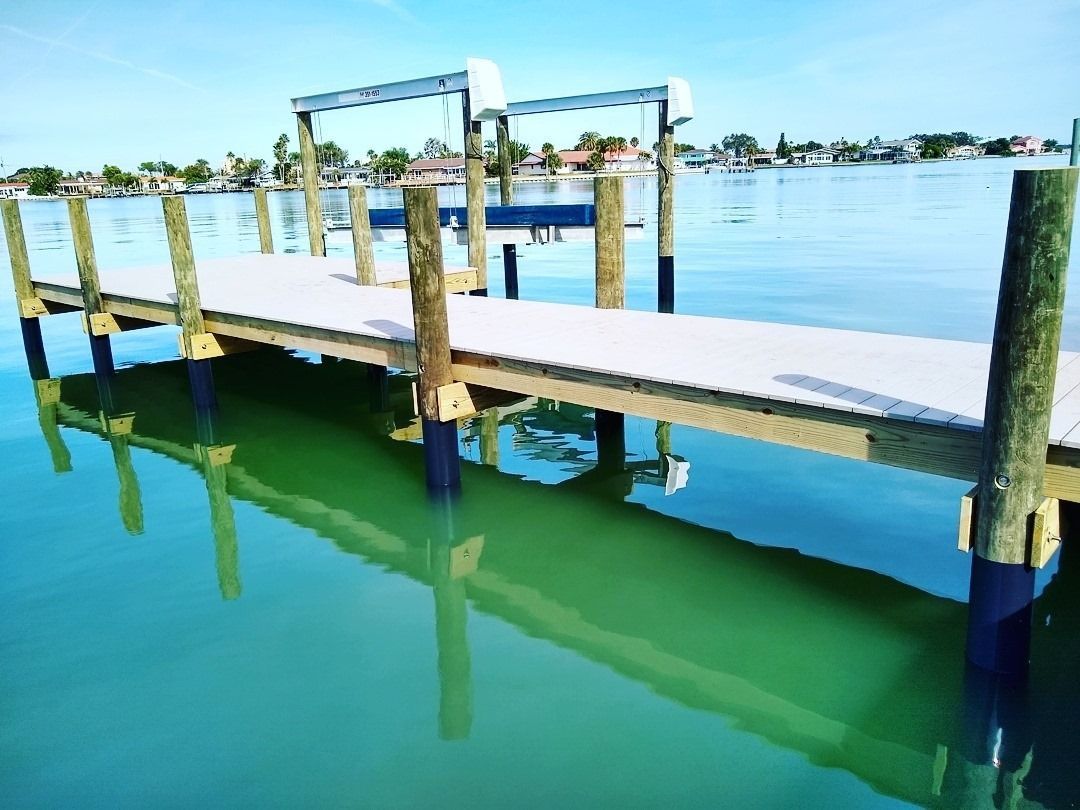
Dock construction Tampa Bay Florida saltwater
3 Counties Served
3 Permitting Agencies Managed
30+ Year Dock Lifespan — Built Right
100% Licensed & Insured
Why Tampa Bay Trusts Us

Why Tampa Bay Homeowners Trust Flagstone Builders for Dock Construction

Flagstone Builders is a fully licensed and insured general contractor under Florida License No. CBC1264493. We provide dock design, construction, and installation services throughout Pinellas County, Hillsborough County, and Manatee County, including St. Petersburg, Tampa, Clearwater, Bradenton, Largo, Palm Harbor, Tarpon Springs, and the waterfront communities surrounding Tampa Bay, Boca Ciega Bay, and the Manatee River. We have completed dock projects across all three counties at every scope level. New fixed-dock installations on canal-front properties throughout St. Petersburg's waterfront neighborhoods. Complete dock replacements in Clearwater Beach and the Intracoastal waterway communities following storm damage. Floating dock systems for kayak launches and watercraft access on Manatee County bayfront properties. Dock additions and extensions in Tarpon Springs and Palm Harbor where existing structures needed deeper water access. Each project required us to navigate a specific set of environmental conditions, permit requirements, and design constraints that are unique to waterfront construction in the Tampa Bay estuary system. We are particularly careful about the permitting phase. This is where dock projects die or get delayed for months, and it is where most homeowners have no idea what they are walking into. The Florida Department of Environmental Protection, sometimes combined with the Army Corps of Engineers for docks in navigable waters, and the local county building department all have jurisdiction over dock construction depending on the location and scope. We assess permit requirements at every site before providing an estimate. We prepare permit applications, coordinate environmental documentation where required, and manage the entire regulatory process as part of our standard scope. We are also particular about materials. Saltwater Tampa Bay conditions accelerate the degradation of materials that perform reasonably well in freshwater or drier climates. The right piling material, the right decking surface, and the right hardware selection all affect how long a dock performs and what the ongoing maintenance costs look like. We give homeowners honest guidance on this tradeoff rather than defaulting to the cheapest option that looks good at handover. Customers tell us consistently that what they valued most was a contractor who understood the permitting landscape and managed it without making the homeowner do the research themselves. In our experience, the dock projects that run smoothly are the ones where the permit process was started correctly from the first day of planning.
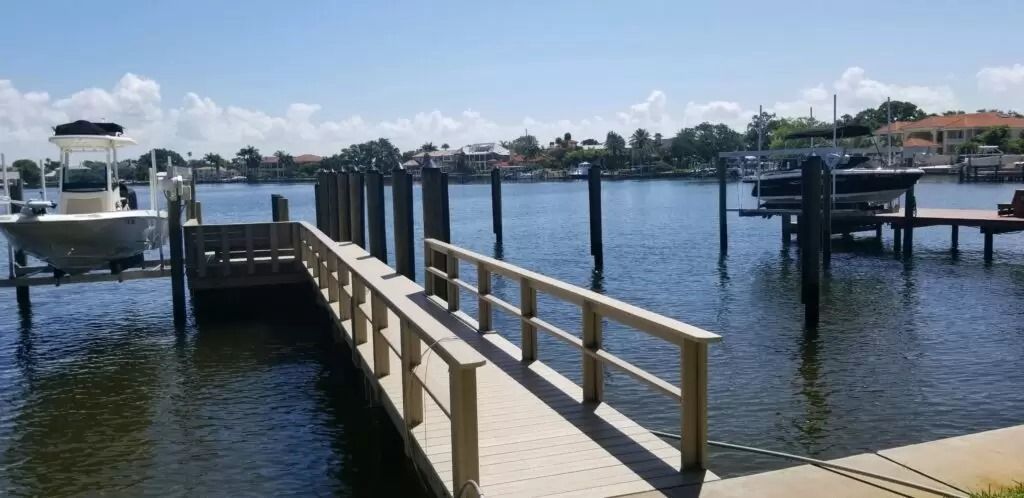
🛡
FL General Contractor License No. CBC1264493 Verifiable through Florida Dept. of Business & Professional Regulation
Flagstone Builders dock construction Tampa Bay Florida waterfront

Service You Can Trust! Call Flagstone Builders today for a free waterfront site assessment and dock estimate — no pressure, no obligation.

Get Free Site Assessment
What We Build

Our Dock Services: Design, Construction, and What Tampa Bay Actually Requires

Let us walk through what dock design and construction in a Tampa Bay waterfront home actually involves. Most competitors present this as a materials-and-labor question. The honest picture is more complicated and more interesting than that.
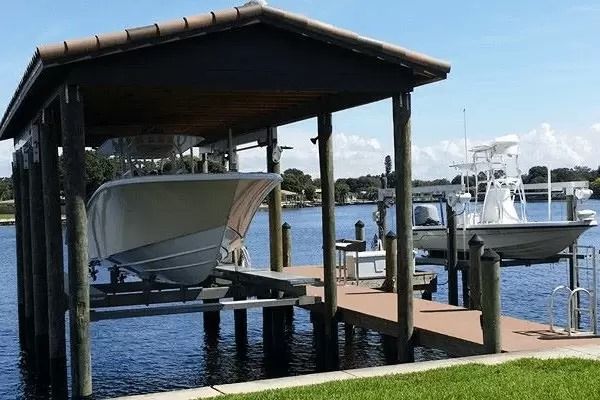
Fixed dock construction pilings Tampa Bay Florida
1

Custom Fixed Dock Design and Construction

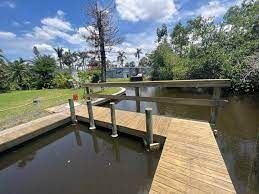
A fixed dock is a permanent structure with pilings driven or drilled into the waterway bottom. Fixed docks are the standard choice for most Tampa Bay tidal waterfront properties because they provide a stable, load-bearing platform that handles boat traffic, fishing, and daily waterfront use without the movement that floating systems introduce. The design phase covers dock length, deck width, platform configuration, piling placement, railing requirements, and any integrated features like fish-cleaning stations, seating areas, or utility connections. We design dock structures around the actual water depth at the site, the tidal range at that location, and the permitted footprint available under applicable regulations. In Tampa Bay, piling material selection is one of the most consequential design decisions. CCA pressure-treated wood pilings remain common and are an appropriate choice in many applications, but saltwater borer organisms accelerate degradation compared to freshwater environments. Composite pilings and concrete pilings last significantly longer in saltwater exposure but cost more per piling. We assess the site conditions and give homeowners an honest comparison of upfront cost versus long-term maintenance and replacement cost for each option.
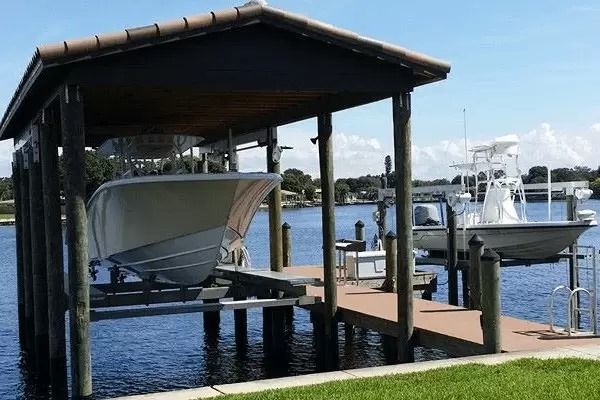
💡 A basic fixed dock with pressure-treated wood decking in a canal-front St. Petersburg or Clearwater neighborhood typically starts in the fifteen to twenty-five thousand dollar range. A composite-decked fixed dock with boat lift rough-in and marine-grade hardware runs thirty thousand to fifty thousand dollars or more depending on scope.
2

Floating Dock Systems

Floating docks rise and fall with water level and are anchored rather than piled. They are appropriate for locations with significant tidal range where a fixed dock would strand a boat at low tide, or for applications like kayak launches and paddleboard access where ease of water entry matters more than load-bearing capacity. Floating dock systems in Tampa Bay must be properly anchored against storm surge and wave action. We do not install floating dock systems without adequate anchoring design for the exposure conditions at the specific site. Inadequately anchored floating docks become projectiles during storm events.
💡 View our exterior remodeling and outdoor construction services page for information on paver patios, decks, and waterfront access features that complement a new dock installation.
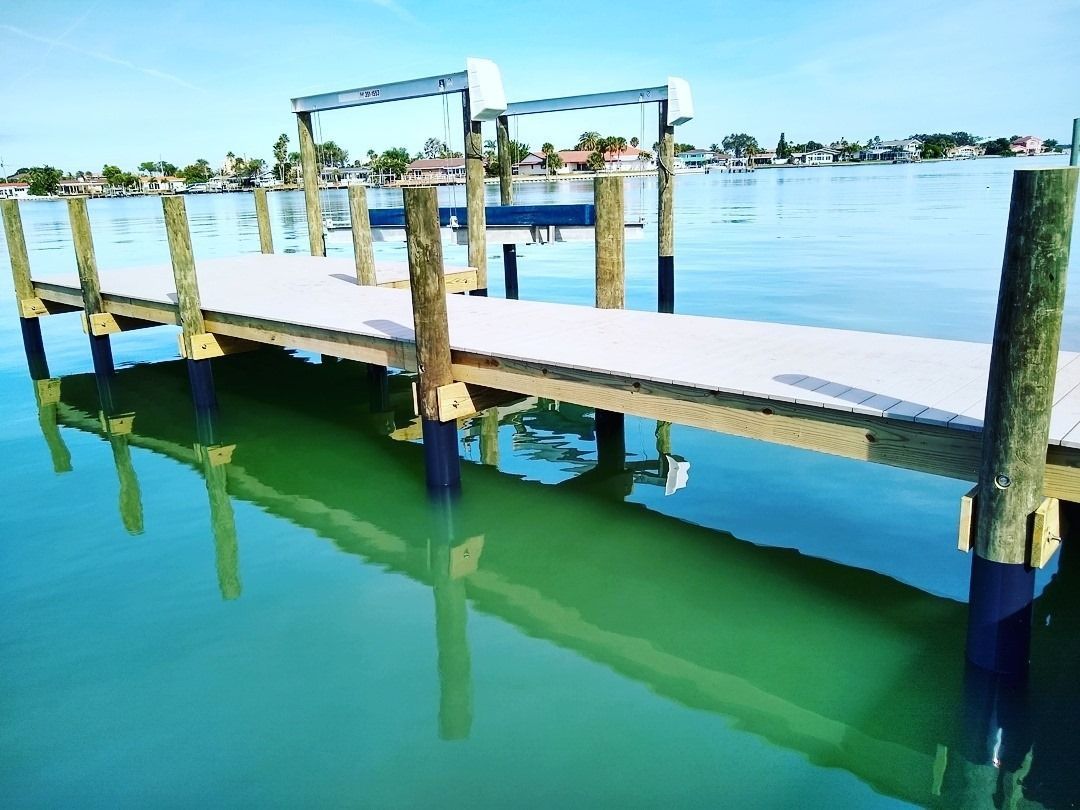
Floating dock system Tampa Bay Florida kayak
Dock permit FDEP Army Corps Tampa Bay Florida
3

Dock Permitting and Regulatory Navigation

Dock permitting in Florida involves multiple agencies and the requirements vary by location, dock size, and environmental sensitivity of the water body. Most private single-family docks of 1,000 square feet or less on waters that are not Outstanding Florida Waters qualify for an FDEP exemption or general permit with a simplified review process. Docks that exceed size thresholds, are located in Outstanding Florida Waters, affect seagrass beds or mangroves, or fall within Aquatic Preserve boundaries require individual permits with more detailed review and sometimes biological assessments. Docks on navigable waters also require a Section 10 review by the U.S. Army Corps of Engineers in addition to FDEP review. The specific waters of Tampa Bay bring additional regulatory considerations. Boca Ciega Bay, portions of Tampa Bay proper, and the waters around Anna Maria Island and Manatee County are subject to heightened environmental scrutiny because of documented seagrass beds and active manatee habitat. Dock placement, dock height above water, and the boat clearance at the mooring location all factor into whether a permit is approved, modified, or denied. We assess these conditions at every waterfront site before finalizing a design.
💡 General permit review typically takes several weeks. Individual permit review for larger or environmentally sensitive projects takes several months. We include an honest permit timeline in every project schedule — not a two-week promise on projects that require months of FDEP review.
4

Hurricane-Resistant Dock Construction

Hurricanes Helene and Milton in 2024 caused extensive dock damage across Tampa Bay, particularly in low-lying waterfront communities in Pinellas County and the coastal areas of Hillsborough and Manatee Counties. Post-storm dock construction and replacement demand in Tampa Bay is currently high, and contractors with full permitting capability are booking several months out. Hurricane-resistant dock design considerations include adequate piling embedment depth for the soil conditions at the site, cross-bracing or knee-brace connections between pilings for lateral stability, and decking material selection that resists wind uplift. We build hurricane resistance into every dock design rather than treating it as an add-on.
💡 View our concrete services page for information on seawall footings, walkway pads, and concrete work that often complements a new dock installation on waterfront properties.
Hurricane-resistant dock design Tampa Bay Florida
How We Work

Our Dock Construction Process: What to Expect

Here is how a dock project moves from first contact to finished structure. Dock projects are more schedule-dependent than most residential construction because the permit timeline is largely outside our control. We tell you honestly what to expect for each phase.
1
Free Waterfront Site Assessment We visit the property, assess the existing dock condition or the proposed dock location, identify water depth and tidal characteristics, evaluate seagrass or vegetation conditions near the proposed footprint, review setback requirements from property lines and the neighbor's dock, and discuss the intended use of the new dock.
2
Design & Scope Development We develop a dock design that meets your functional requirements within the permitted footprint available at the site. Design covers dock dimensions, piling locations, deck material, railing configuration, boat lift rough-in if applicable, and any integrated features. We document all specifications in writing before permit applications are submitted.
3
Permit Applications We prepare and submit FDEP applications, Army Corps review coordination where navigable waters are involved, and county building department applications. General permit review typically takes several weeks. Individual permit review for larger or environmentally sensitive projects takes several months. We include an honest permit timeline in every project schedule.
4
Environmental Documentation For projects in regulated waters or near seagrass beds, we coordinate biological assessments and provide required environmental documentation as part of the permit application. In areas with active manatee habitat, the dock design must demonstrate boat access depth that minimizes prop strike risk.
5
Material Procurement Once permits are approved, materials are ordered and delivery is coordinated with the construction schedule. Marine construction materials have longer lead times than standard building materials and we factor this into the project timeline.
6
Piling Installation Pilings are driven or drilled to the specified embedment depth for the soil conditions at the site. Embedment depth is not optional and it is not estimated. It is engineered for the load conditions and storm exposure at the specific location.
7
Framing and Decking Dock framing, stringers, and decking are installed in sequence. All hardware is marine-grade stainless steel or equivalent rated for saltwater exposure. Galvanized or standard hardware is not used in Tampa Bay saltwater applications.
8
Final Inspection & Walkthrough County inspection is coordinated and passed. Railing, cleats, dock lighting, and any accessories are installed. We walk through every element with you before closing out the project.
Dock projects with simple FDEP exemptions or general permits typically run six to twelve weeks from contract execution to completion. Projects requiring individual FDEP permits can run six to twelve months or longer for permit approval alone before construction begins. We give you a permit-specific realistic timeline after the site assessment.
Marine Construction Standards

Materials and Marine Construction Standards for Tampa Bay

We are particular about materials and construction methods on dock projects in Tampa Bay. The choices that seem minor at handover determine whether a dock performs for twenty-five years or requires major work at ten. For piling installation in sandy or soft sediment conditions common in Tampa Bay's canal and bayfront properties, we use vibratory hammer equipment to drive pilings to specified embedment depth. In areas with limestone or hardpan conditions, we drill rather than drive. The equipment selection is based on the actual soil conditions at the site.
🌳
Composite Decking Over Pressure-Treated Wood in Saltwater Composite deck boards are non-porous, resist moisture infiltration, do not splinter under bare feet in the Florida sun, and do not require the sealing and staining schedule that wood demands — the upfront cost premium typically pays back within five to eight years of avoided maintenance in saltwater
🔨
CCA Pressure-Treated Wood Pilings — Site-Specific Assessment Appropriate for many Tampa Bay canal and bay installations with reasonable service life when sized and embedded correctly — composite and fiberglass pilings provide longer life in high-salinity or high-biological-activity water — concrete pilings offer maximum durability for heavy-load applications — we do not specify piling material without knowing the site conditions
Marine-Grade 316 Stainless Steel Hardware — Non-Negotiable Standard galvanized hardware corrodes in Tampa Bay's salt environment within years, creating loose connections and structural compromise — the cost difference between galvanized and stainless hardware on a dock installation is modest — the consequence of using galvanized hardware in saltwater is not
📈
Vibratory Hammer Equipment for Soft Sediment Piling Installation Sandy and soft sediment conditions are common in Tampa Bay's canal and bayfront properties — vibratory hammer drives pilings to specified embedment depth — in limestone or hardpan conditions we drill rather than drive
🌫
Hurricane-Resistant Cross-Bracing and Embedment Engineering Piling embedment depth engineered for load conditions and storm exposure at the specific location — cross-bracing or knee-brace connections between pilings for lateral stability against wave and surge forces
Dock materials composite decking marine grade Tampa Bay Florida
Why Timing Matters

What Deferred Dock Maintenance and Poor Planning Cost in Tampa Bay

A dock deferred too long stops being a maintenance question and becomes a replacement question, usually at a worse time and a higher cost than planned replacement would have required. The saltwater degradation timeline in Tampa Bay is faster than most homeowners expect. Untreated or improperly maintained wood components in saltwater exposure begin showing structural compromise within five to ten years. Piling deterioration below the waterline is invisible from the dock surface and is typically discovered only when a piling shifts under load or during a visual inspection. Decking that looks solid from above may have significant moisture damage in the framing below. We perform dock condition assessments for homeowners who want an honest picture of where their existing dock stands before committing to a repair versus replace decision. The financial cost of deferred dock replacement compounds because storm events reset the clock. A dock that was marginal before Hurricane Helene became a complete loss afterward for many Tampa Bay waterfront homeowners. Rebuilding after a storm event means competing with every other damaged dock owner in the same market for contractor availability, material supply, and permit processing capacity. Starting a planned dock replacement during a non-emergency period at a timeline of your choosing costs less and produces a better result than emergency post-storm replacement under demand pressure. From a property value standpoint, a well-designed and well-maintained dock is among the highest-value improvements a Tampa Bay waterfront property owner can make. Waterfront properties with functional, permitted, modern docks command measurably higher prices in the Tampa Bay real estate market than comparable properties with deteriorated or absent dock structures. The dock is not just infrastructure. In this market, it is a primary amenity that buyers evaluate directly. Hurricane season scheduling matters for dock projects. The optimal construction window for dock projects in Tampa Bay runs October through May. Starting the permit process in late summer for fall construction positions a project to begin the moment the hurricane season window opens. Dock projects started during hurricane season face weather delays for pile driving and open-water work that are not present in the fall and winter months.
🔄 Saltwater Damage in 5 to 10 Years

Wood components in saltwater Tampa Bay exposure begin showing structural compromise within five to ten years. Piling deterioration below the waterline is invisible until a piling shifts under load. Decking that looks solid may have significant framing damage below.

🌫 Storm Events Reset the Clock

A marginal dock before Hurricane Helene became a complete loss for many Tampa Bay homeowners. Emergency post-storm replacement competes with every other damaged dock owner for contractor availability, materials, and permit processing.

🏠 Primary Amenity — Direct Buyer Evaluation

Waterfront properties with functional, permitted, modern docks command measurably higher prices. The dock is not just infrastructure in this market. It is what buyers come to see. An unpermitted or deteriorated dock is a liability at closing.

📅 October Through May — Optimal Build Window

Starting the permit process in late summer for fall construction avoids hurricane season weather delays for pile driving and open-water work. General permits can be ready in weeks. Start early to build on your schedule, not storm season's.
Licensed dock contractor Tampa Bay Florida Flagstone Builders
Why Trust Us

Why You Can Trust Flagstone Builders With Your Dock Project

A dock project involves working in and over the water, coordinating permits with state and federal agencies, and making material decisions that affect the property for decades. The selection of a contractor matters more than in almost any other residential construction category. Customers often tell us that what distinguished our process was the permit transparency. We explained exactly what agencies were involved, what the realistic timeline was for approval, and what design constraints the permits would impose on the final structure. We did not promise two-week turnaround on projects that require FDEP individual permit review. What they tell us after completion is that the timeline was accurate, the permit was handled without the homeowner having to manage any of it, and the finished dock was built to the spec documented in the contract. We are a fully licensed and insured general contractor under Florida General Contractor License No. CBC1264493. All dock construction performed under our license is covered by our general liability insurance and workers compensation coverage. Marine construction involves specialized risk that general contractors without marine experience are not appropriately covered for. We carry the correct coverage and we do not use unlicensed marine labor on dock projects. Our written contracts document every element of a dock project. Dock dimensions. Piling material and embedment depth. Decking material and manufacturer specification. All hardware specification. The permit scope and which agencies are involved. The complete construction timeline including the permit phase. The full payment schedule. We do not begin construction without permits in hand and we do not change scope mid-project without your written approval. We stand behind our finished dock construction. If a connection fails within normal warranty coverage, if a hardware fitting corrodes prematurely due to specification error, if any structural element underperforms, we come back and make it right. That standard applies to every project we complete.
🛡
FL General Contractor License No. CBC1264493 Verifiable through Florida Dept. of Business & Professional Regulation
Hyper-Local Knowledge

What We Know About Dock Construction Across Tampa Bay

Here is the local regulatory and environmental context that most Tampa Bay dock pages skip entirely. This information directly affects what kind of dock you can build, how long the permit will take, and what the design must include.
Boca Ciega Bay and Seagrass — Southern Pinellas County Design Driver Boca Ciega Bay has documented seagrass beds across much of its shallow interior. FDEP and Army Corps permitting for docks in these areas requires the dock design to demonstrate that boats moored at the dock will not have prop contact with seagrass beds. This typically requires adequate water depth at the mooring end of the dock. Dock designs that cannot achieve the required clearance over seagrass may require a longer dock extension to reach deeper water, which increases cost and may trigger a different permit level.
Manatee Protection Zones — Tampa Bay and the Manatee River Manatee protection zones throughout Tampa Bay and the Manatee River impose speed restrictions on the waterways and in some cases affect dock design requirements. Permitting agencies evaluate whether a dock and boat lift placement creates a risk of manatee injury from prop strike in high-manatee-traffic areas. We assess manatee zone designation at every project site as part of the permitting scope.
Post-Hurricane Helene and Milton Demand — What Tampa Bay Homeowners Should Know Storm damage from both 2024 hurricanes was substantial for waterfront dock structures throughout the region. Post-Hurricane Helene and Milton demand in Tampa Bay has significantly increased the backlog of dock construction projects across all three counties. Homeowners planning new docks or post-storm replacements should expect longer lead times for both contractor availability and permit processing. Starting the permitting process as early as possible reduces wait time on the construction side. We advise homeowners on realistic timelines given current backlog conditions.
Aquatic Preserve Waters — Anna Maria Island and Manatee County (500 vs 1,000 Sq Ft) Aquatic Preserve waters near Anna Maria Island and Manatee County are among the most stringently regulated waterways in the Tampa Bay region. Most bay waters in Manatee County, including Anna Maria Sound and Palma Sola Bay, are designated Outstanding Florida Waters. Docks in these areas are limited to 500 square feet under the FDEP exemption threshold rather than the standard 1,000 square feet. Individual permit review is required for any dock exceeding those limits or affecting sensitive habitat. We are familiar with the specific permitting conditions for these waterways and factor them into design and cost estimates for Manatee County projects.
Shore Acres, Venetian Isles, Snell Isle — St. Petersburg Canal Network Setbacks For St. Petersburg's canal network and bayfront properties in neighborhoods including Shore Acres, Venetian Isles, Snell Isle, and comparable waterfront communities, dock setback requirements from adjacent property lines and navigational channel clearance are the primary design constraints alongside permitting. Canal-front properties in these neighborhoods often have tighter footprint constraints than open bayfront properties. We assess setback conditions at every site before developing a dock design.
Optimal Permit and Build Window — October Through May Starting the permit process in late summer for fall construction is the most effective way to control overall project duration. Dock projects started during hurricane season face weather delays for pile driving and open-water work. General permit review takes several weeks, individual permit review takes several months. Projects requiring individual FDEP permits can run six to twelve months or longer for permit approval alone before construction begins. We include permit-specific timelines in every project estimate after the site assessment.
Our Commitment

Why Waterfront Homeowners Choose Flagstone Builders for Dock Construction

We believe strongly that waterfront property deserves a dock contractor who understands the specific regulatory and environmental conditions of Tampa Bay. Not a general contractor applying land-construction logic to marine work. Not a franchise operation without permit expertise. A contractor who has navigated the FDEP process, assessed the seagrass conditions, and built structures that perform through multiple hurricane seasons in this specific estuary. That is the standard we hold ourselves to.
  • Florida Licensed & Insured General Contractor License No. CBC1264493 — verifiable through the Florida DBPR online system
  • Full Permitting Scope Management FDEP general and individual permits, Army Corps Section 10 coordination, and county building department review all handled under our scope — you do not manage the permit process
  • Honest Permit Timeline Estimates We tell you upfront whether your project is a weeks-long general permit or a months-long individual permit, and we build that into the project schedule
  • Environmental Assessment Capability Seagrass presence, manatee zone designation, Outstanding Florida Waters classification, and Aquatic Preserve status are all assessed at every project site before design is finalized
  • Marine-Grade Material Standard 316 stainless steel hardware, composite or appropriately rated wood decking, and piling material selection based on site-specific water conditions — not the cheapest option, the right option
  • Hurricane-Resistant Construction Piling embedment depth, cross-bracing, and hardware connections engineered for Tampa Bay storm exposure conditions
  • Post-Storm Experience We have completed dock assessments and replacements following hurricane events across Tampa Bay and understand the specific failure patterns storm events produce
  • Free Waterfront Site Assessments & Written Estimates No pressure. No obligation. You know the full scope, cost, and realistic timeline before any commitment.
Dock construction Flagstone Builders Tampa Bay Florida waterfront
Where We Serve

Dock Construction Service Areas

We provide dock design, construction, and installation services throughout the greater Tampa Bay waterfront region. Based in St. Petersburg — waterfront projects anywhere in our service area receive the same quality standards.
Pinellas County Tampa Bay, Boca Ciega Bay, Intracoastal, Canals
St. Petersburg
Clearwater
Largo
Palm Harbor
Pinellas Park
Tarpon Springs
East Lake
Lealman
Hillsborough County Hillsborough Bay, Tampa Bay, Hillsborough River
Tampa
Plant City
Temple Terrace
Manatee County Manatee River, Anna Maria Sound, Sarasota Bay
Bradenton
Bradenton Beach
Anna Maria
Holmes Beach
Longboat Key
Palmetto
We are based in St. Petersburg and serve all three counties as our regular service area. Waterfront projects on Anna Maria Island or Longboat Key receive the same level of attention and the same quality standards as projects right in our own neighborhood. Not sure if your property falls within our range? Call us at 727-748-9251 and we will confirm quickly. In most cases the answer is yes. 📞 Call 727-748-9251

Service You Can Trust! Free waterfront site assessments  ·  Full permit management  ·  Fully licensed and insured in Florida

Get Free Estimate Online
Common Questions

Frequently Asked Questions About Dock Construction in Tampa Bay

Real questions from Tampa Bay waterfront homeowners — answered straight before you commit to a dock design or construction project.
It depends significantly on the dock type, size, materials, water depth, and permit complexity. A basic fixed dock with pressure-treated wood decking in a canal-front St. Petersburg or Clearwater neighborhood typically starts in the fifteen to twenty-five thousand dollar range for a modest footprint. A composite-decked fixed dock with boat lift rough-in and marine-grade hardware runs thirty thousand to fifty thousand dollars or more depending on scope. Open-water bayfront installations requiring longer spans to reach usable water depth, or projects in environmentally sensitive areas requiring individual FDEP permits and biological assessments, can run significantly higher. Permitting costs alone range from a few hundred dollars for a simple general permit to several thousand for an individual permit with environmental review. We provide detailed written estimates after the site assessment.
In most cases, yes. The Florida Department of Environmental Protection requires a permit or authorization for dock construction in state surface waters. Private single-family docks of 1,000 square feet or less that do not affect seagrass, mangroves, or Outstanding Florida Waters may qualify for an exemption or simplified general permit. Docks that exceed size thresholds, are located in Outstanding Florida Waters such as portions of Manatee County waters, or affect sensitive habitat require an individual permit with detailed environmental review. Docks in navigable waters also require coordination with the U.S. Army Corps of Engineers. And your county building department has separate permitting requirements. We assess all applicable permit requirements at every project site and manage the entire application process as part of our standard scope.
For decking, composite material outperforms pressure-treated wood in Tampa Bay's saltwater environment in terms of long-term maintenance cost, splinter resistance, and appearance retention. The upfront premium is real, but the long-term math typically favors composite in saltwater applications. For pilings, CCA pressure-treated wood is appropriate for many Tampa Bay installations when sized and embedded correctly. Composite and concrete pilings last longer in high-salinity conditions but cost more per unit. For hardware, marine-grade 316 stainless steel is non-negotiable in saltwater. Galvanized hardware corrodes too quickly in Tampa Bay conditions to be appropriate for any load-bearing dock connection. We match material recommendations to the specific site conditions and your long-term cost tolerance.
The permit phase determines the overall project timeline more than the construction phase. A dock that qualifies for an FDEP exemption or general permit can move from permit application to construction completion in six to twelve weeks in most cases. A dock requiring an individual FDEP permit can take six to twelve months or longer just for permit approval, before construction begins. After permit approval, physical dock construction typically runs two to four weeks for a standard residential dock depending on scope. We give you a permit-specific timeline after the site assessment. Starting the permit process early, ideally in late summer for fall construction, is the most effective way to control overall project duration.
It depends on the dock design and the water depth over the seagrass. Florida regulations generally require that a dock designed for boat mooring must achieve adequate water depth at the mooring end to provide prop clearance above the seagrass canopy. If your waterfront property has seagrass beds in the adjacent water, the dock design must either position the boat mooring end in deep enough water that props clear the grass, or avoid mooring boats in the seagrass area entirely. In some cases, this requires a longer dock extension than the property owner initially planned. Seagrass avoidance is assessed during the permit application and can affect both the dock design and the type of permit required.
A fixed dock is supported by pilings driven or drilled into the waterway bottom and maintains a constant height relative to the land. It is stable, load-bearing, and appropriate for most Tampa Bay tidal waterfront applications. A floating dock is anchored but rises and falls with the water level. Floating docks are appropriate for locations with high tidal range where a fixed dock would leave a boat stranded at low tide, and for low-traffic applications like kayak launches. Fixed docks generally last longer and handle heavier use. Floating docks are more portable and can be removed before storm events. For most Tampa Bay residential waterfront properties, a fixed dock is the more functional and durable solution. We assess the specific tidal characteristics of each property before recommending dock type.
It varies based on piling and decking material, construction quality, maintenance practices, and storm exposure. CCA pressure-treated wood decking in saltwater Tampa Bay conditions typically lasts fifteen to twenty years with regular maintenance including sealing and board replacement as needed. Pilings last longer, often twenty-five to thirty-plus years, but subsurface deterioration from marine borers is not visible without inspection. Composite decking in the same saltwater conditions lasts significantly longer with less maintenance. The honest answer is that a well-built composite-decked dock in Tampa Bay can serve thirty years or more. A wood-decked dock with minimal maintenance in high-salinity saltwater may need significant work at ten to fifteen years.
Yes, consistently. Tampa Bay waterfront properties with functional, permitted, well-maintained docks command measurably higher prices than comparable waterfront properties without dock access. The dock is a primary amenity that buyers of waterfront properties evaluate directly during showings. An unpermitted dock or a dock in deteriorated condition creates a liability rather than a value addition. A dock that is permitted, built to current standards, and in good repair is among the highest-value improvements a Tampa Bay waterfront property owner can make relative to its cost.
For most residential dock projects in Pinellas County, the required permits include an FDEP environmental resource permit or exemption verification, a Pinellas County building permit for the structure, and in some cases an Army Corps of Engineers authorization for docks in navigable waters. The specific requirements depend on the dock size, the water body, proximity to seagrass, and whether the water is classified as Outstanding Florida Waters or part of an Aquatic Preserve. FDEP exemption applies to private single-family docks of 1,000 square feet or less that meet certain environmental criteria. We assess the specific requirements for your Pinellas County property after a site visit and manage all permit applications as part of the project scope.
Hurricane-resistant dock construction involves several design elements that work together. Adequate piling embedment depth for the soil conditions at the site is the most important factor. Pilings that are not embedded deeply enough pull out of the waterway bottom under storm surge loads. Cross-bracing or knee-brace connections between pilings provide lateral stability against wave and surge forces. Marine-grade hardware connections that cannot loosen under cyclic loading prevent connection failures during storms. For floating docks, the anchoring system must be designed for storm surge and wave amplitude in the specific exposure location. After Hurricanes Helene and Milton, we have observed the specific failure patterns that produced dock losses across Tampa Bay and we incorporate those lessons into every current dock design.
Ready to Get Started?

Start Your Dock Project
the Right Way Today

Serving St. Petersburg, Tampa, Clearwater, Bradenton, and the entire Tampa Bay waterfront. Call or email us now — honest guidance, no pressure, no obligation.
📞
727-748-9251 Call for Free Site Assessment
[email protected] Email Us Anytime
📍
St. Petersburg, FL 33709 Serving All of Tampa Bay
Florida General Contractor License No. CBC1264493  |  Fully Licensed and Insured  |  flagstonebuilders.net